



The University of Göttingen is an internationally renowned research university. Founded in 1737 in the Age of Enlightenment, the University is committed to the values of social responsibility of science, democracy, tolerance and justice. It offers a comprehensive range of subjects across 13 faculties: in the natural sciences, humanities, social sciences and medicine. With about 28,000 students and more than 210 degree programmes, the University is one of the largest in Germany.
New press releases
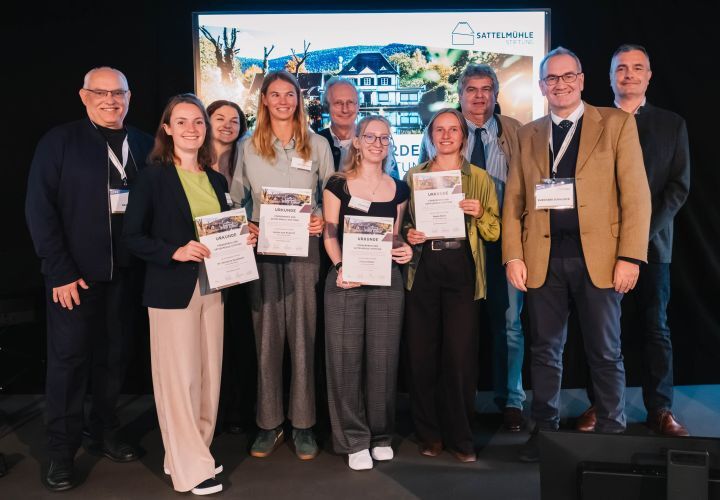
Forestry researchers receive awards
The Sattelmühle Foundation has recognised two dissertations in forest sciences at the University of Göttingen: Dr Christina Hackmann received the award for the “Best PhD Thesis”, whilst Leonie von Rudorff won the “Best Master’s thesis”. The prize for the winning PhD thesis is 12,000 euros and 6,000 euros was awarded for the winning Master’s thesis. The award ceremony took place at the Sattelmühle forestry estate in the Palatinate Forest.
more…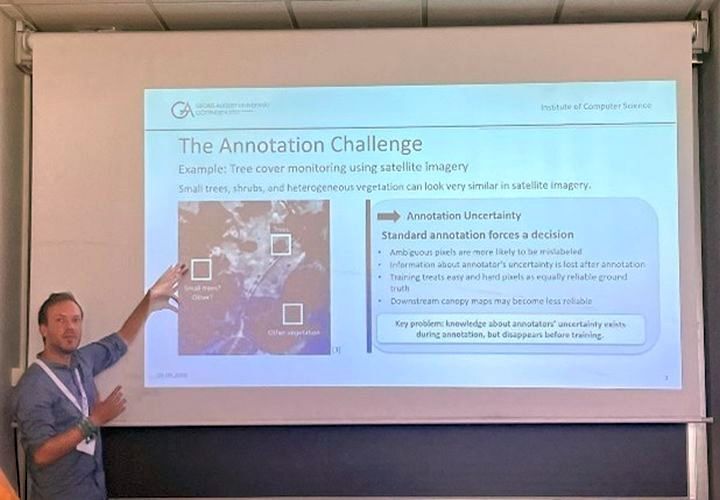
Accounting for uncertainty in AI-based tree cover monitoring
Researchers from the Institute of Computer Science and the Department of Economics at the University of Göttingen have received the Best Paper Award at the ACM International Conference on Information Technology for Social Good (GoodIT 2026). The award, the conference's sole Best Paper Award this year, recognizes their research on making AI-based tree cover monitoring from satellite imagery more reliable.
more…
Eight at a stroke: new labeling method provides comprehensive insight into cellular processes
An international collaboration led by the University Medical Center Göttingen (UMG) and with participation of the University of Göttingen has developed a labeling method that distinguishes fluorescent labels not by color but by how long it takes a dye to emit fluorescence. This makes it possible to visualize eight different proteins in a cell simultaneously in a single step using standard microscopes.
more…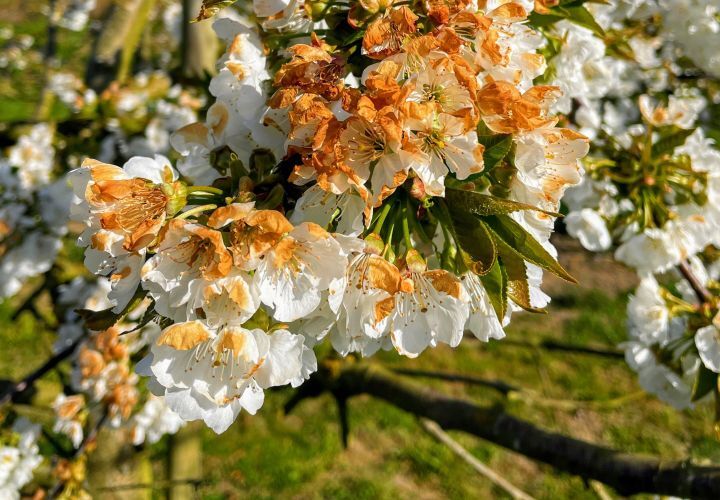
Delaying cherry blossom to reduce frost damage
Climate change is causing many fruit trees to flower earlier, increasing their exposure to damaging late spring frosts. A study led by the University of Göttingen shows that the plant growth regulator ethephon can delay flowering in Kordia – a variety of sweet cherry – potentially protecting blossoms and developing fruitlets from frost. The results were published in BMC Plant Biology.
more…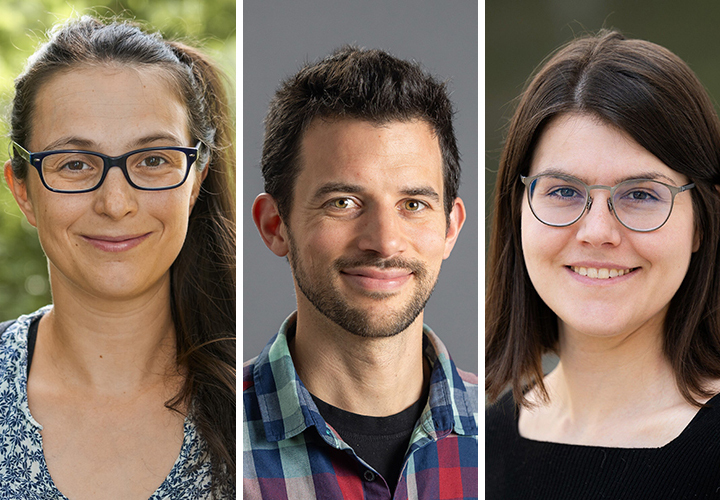
International awards for researchers at Göttingen Campus
Three researchers at the Göttingen Campus have been awarded ERC Starting Grants by the European Research Council (ERC): Dr Sophie de Vries, evolutionary biologist at Göttingen University, Dr Tristan Stöber, computational neuroscientist at Göttingen University and Professor Elisa Oberbeckmann at the University Medical Center Göttingen (UMG). Projects run for five years and are worth around 1.5 million euros each.
more…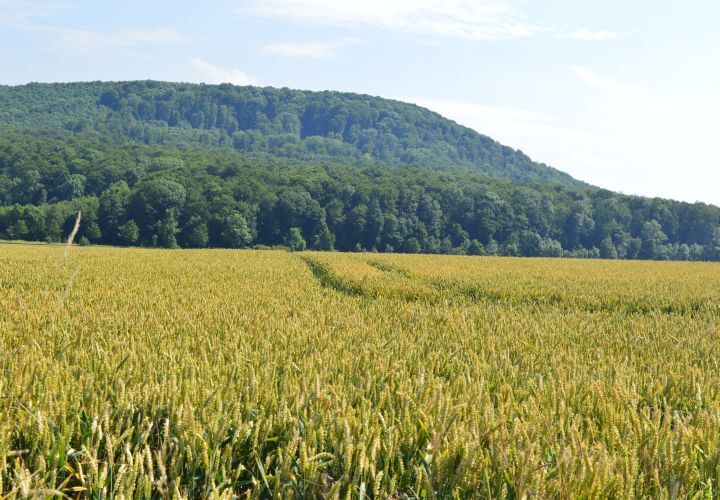
Wildflower strips versus organic farming
What makes more sense when farming wheat – strips of wildflowers along fields or organic farming? Both options provide financial support via the European Union as environmentally friendly and sustainable farming practices. An international research team compared the ecological and economic benefits of these two farming methods in fields planted with winter wheat. They analysed profits and yields and the results were published in the Journal of Applied Ecology.
more…


Events
Lade Veranstaltungen…


